
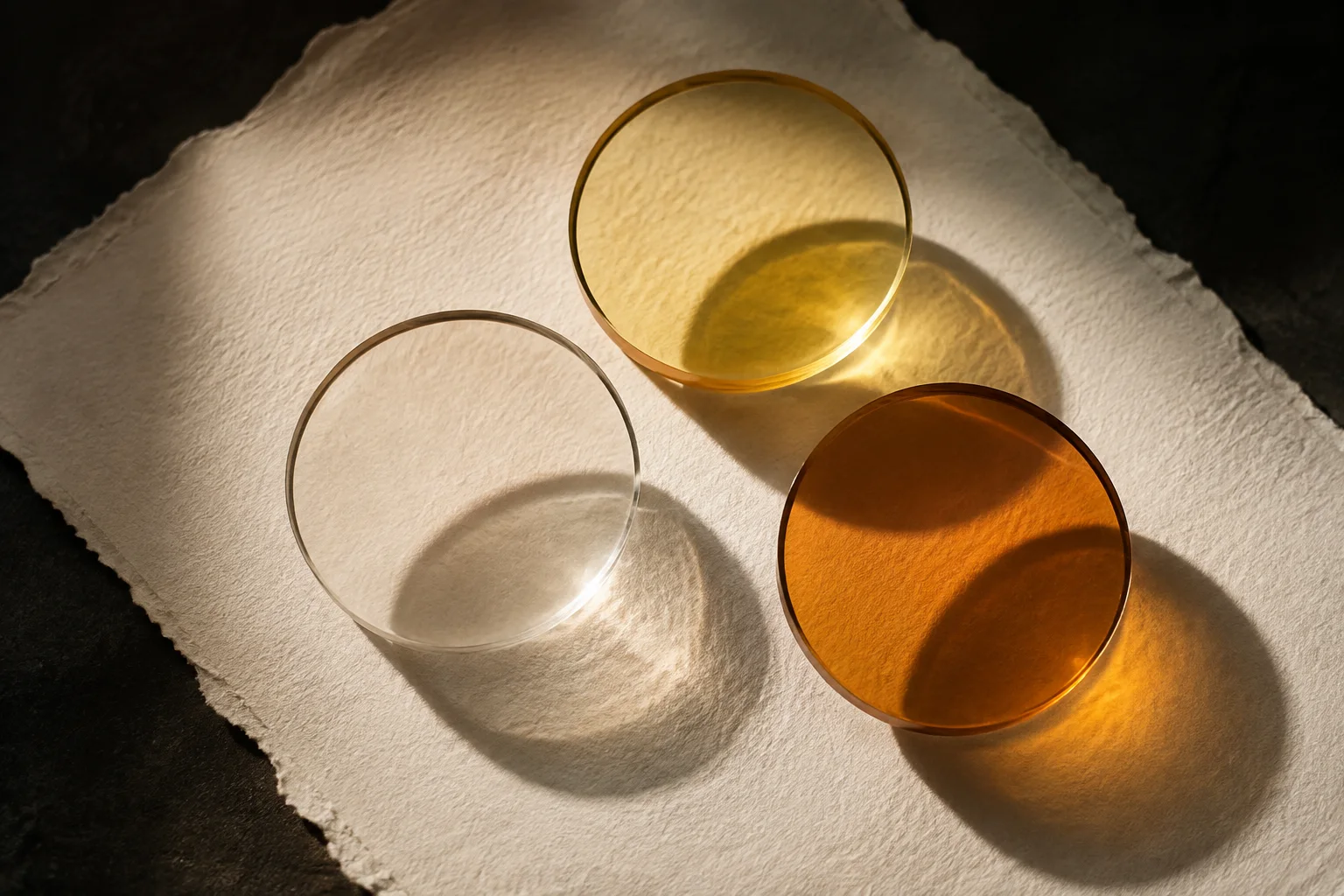
Clear, yellow and amber lenses for shooting are best compared using the actual lens specifications and the conditions where you will wear them. Color names are a starting point, not a universal ranking. A tint that someone else prefers may not suit your light conditions or color preferences.
Key takeaway: Use the comparison table to ask about the actual clear, yellow and amber lenses offered. Color names do not establish light transmission, UV protection or a universal best choice.
This guide gives you a practical way to discuss the three options. For the broader explanation of tint, transmission and appearance, see how shooting lens color affects the view.
Clear vs yellow vs amber: the questions to compare
| Option | What to compare | Question for the team |
|---|---|---|
| Clear | Color neutrality and the view in your normal lighting. | What are this lens's light-transmission and UV specifications? |
| Yellow | The change in color appearance and the exact tint intensity. | Can I compare this filter with clear in similar light? |
| Amber | The warmth of the view and any reduction in brightness. | How does this particular amber differ from the yellow option? |
The table deliberately avoids assigning a winning tint to every environment. Even lenses within the same color family can differ. Request information about the exact option being offered rather than assuming that color names are standardized across suppliers.
When comparing clear lenses
Use clear as a reference for how the scene appears without a noticeable tint. Look at ordinary printed material, neutral colors and the environments where the glasses will be used. Ask about coatings separately so you do not confuse a surface treatment with a tint choice.
Clear appearance does not tell you the lens's impact performance or UV specification. As with tinted options, those require documentation for the product you are considering.
When comparing yellow and amber lenses
Describe whether you prefer the changed color appearance and whether the proposed tint is comfortable in the dimmest conditions you expect. Do not select a lens based only on how it looks in a bright product photograph.
Yellow should not be treated as a night-vision feature. In a study of simulated night driving, tested yellow glasses did not improve pedestrian detection. That result does not establish performance in shooting, but it is a reason to avoid transferring broad low-light claims between unrelated activities.
Keep UV protection and color choice separate
The American Optometric Association's sunglasses guidance emphasizes checking UV protection. For outdoor use, ask for the specification rather than judging protection by how dark or warm a lens appears.
The same principle applies to impact claims: a color does not certify a frame-and-lens combination. Compare the visual option and the protective documentation as separate parts of the decision.
Comparing lenses for shooting before you choose
Tell the team whether you mainly use indoor or outdoor facilities, how much the light varies and what you dislike about your current lenses. You can leave the final choice open until the available options have been explained.
Browse the listed colors on Soter Sight Precision and use our buyer's checklist to keep tint decisions connected to fit, correction and the complete offer.
Frequently asked questions
Is amber always darker than yellow?
No. Ask about the actual tint intensity and transmission of both lenses.
Will one color work equally well everywhere?
There may be trade-offs between bright and dim environments. Discuss the full range of conditions rather than one ideal setting.
Must I choose a lens color on the contact form?
No. Request contact with your name and preferred channel. Lens selection belongs in the follow-up discussion.