
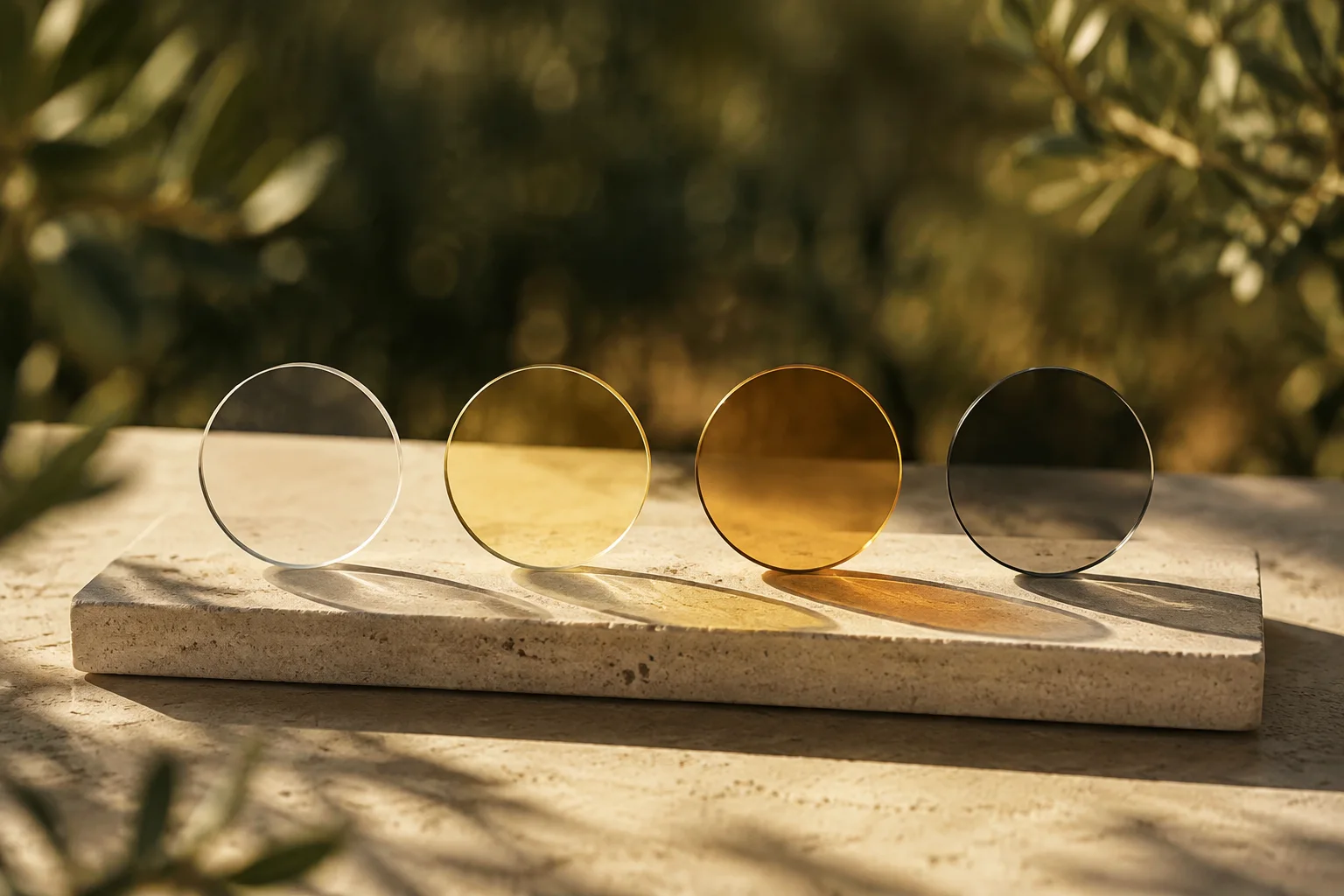
Shooting lens color changes how a scene looks through your glasses. It can also change how comfortable a particular environment feels. The useful choice depends on the actual lens, the available light and your preferences; a color name alone is not enough to select a configuration.
Key takeaway: Separate light transmission, color appearance and measured performance. This article explains those distinctions; the linked clear, yellow and amber comparison helps you turn them into questions about specific lenses.
Think of tint as one part of a wider eyewear decision. Prescription, fit, coverage and documented protection still need their own checks. A familiar color is not a substitute for any of them.
Three questions behind shooting lens color
First, ask how much visible light the lens transmits. Two lenses called “yellow” can have different tint intensities. Second, compare how colors appear through them. Third, consider the environments where you expect to wear them, including the dimmest conditions rather than only a bright outdoor scene.
Keep ultraviolet protection separate from appearance. The American Optometric Association notes that dark-looking sunglasses may still lack suitable UV protection. Ask for the actual UV specification instead of inferring it from color or darkness.
How shooting lens color changes the comparison
- Clear: a useful reference when comparing color appearance. Confirm the finished lens's light transmission and protection rather than assuming every clear lens is identical.
- Yellow: changes the color balance of the view. Assess whether you prefer that appearance in your normal conditions without assuming it improves low-light performance.
- Amber: another warm-tint option. Compare its actual intensity with yellow; the names do not tell you which lens is lighter.
- Smoke or gray: an option to discuss for bright conditions. Check whether it becomes too dark in shaded or indoor areas you also use.
For a direct comparison of the first three options, read clear vs yellow vs amber lenses. Use the comparison as a question guide rather than a universal recommendation.
Perceived brightness is not proof of better visibility
A tinted view may feel more comfortable or more vivid without improving a measured task. A 2019 study of yellow lenses in simulated night driving found no improvement in pedestrian detection compared with clear lenses. It was a driving study, not a shooting study, so it cannot rank range performance. It does show why broad “better vision at night” claims deserve scrutiny.
When discussing lenses, describe the lighting and your experience instead of asking for a promised performance increase. Ask what information the supplier has for the exact filter being offered.
Build a practical comparison note
Write down where you will use the glasses, whether light changes during a typical visit, and whether you need neutral color appearance. If you already own a tint, explain what you like and dislike about it. Include any difficulty reading ordinary signs or displays through that lens.
You can compare the listed options on Soter Sight Precision before contacting us. The team can then discuss your questions without requiring you to select a tint on the website.
Frequently asked questions
Is yellow always the best choice for an indoor range?
No. Indoor lighting varies, and tint intensity matters. Discuss the actual conditions and transmission of the proposed lens.
Does a darker tint mean stronger impact protection?
No. Ask separately for the documentation covering the frame and lenses.
Can I leave tint selection until later?
Yes. Leave your preferred contact details. Lens options can be discussed by email or WhatsApp after the first contact.