
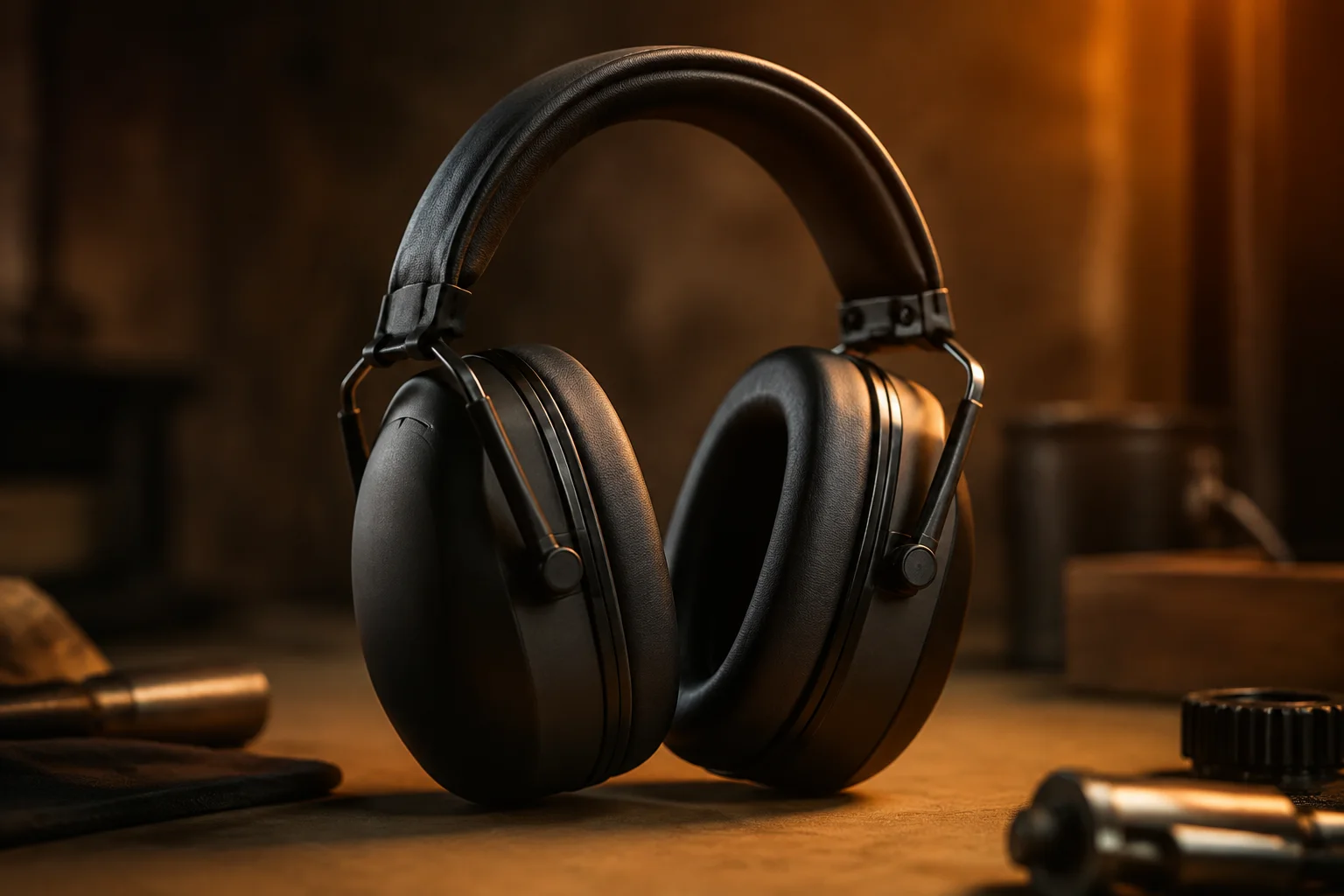
Shooting glasses and earmuffs share a small space around your ears. The temples of the glasses pass near or underneath the cushions, so the combination deserves a fit check. Comfort with each item on its own does not guarantee comfort when they are worn together.
Key takeaway: Try your glasses and earmuffs as a combination. Low-profile temples may reduce bulk, but comfort alone cannot verify the hearing protection achieved by an individual wearer.
Flat, low-profile temples are a feature worth discussing, especially if a bulky frame presses against your head. However, the frame profile is only one part of the fit. Cushion condition, head shape and the way the equipment sits also matter.
Why shooting glasses and earmuffs need a joint fit check
NIOSH guidance on hearing protection identifies compatibility with other protective equipment, including eyeglasses, as a selection factor. It also emphasizes individual fit testing rather than assuming the label rating represents the protection achieved by every wearer.
A slimmer temple may reduce bulk in the contact area, but it cannot establish a guaranteed acoustic seal for every earmuff. Avoid treating “ear-pro compatible” as a promise of a specific noise reduction. Ask about your actual combination.
What to notice when trying the combination
Try the glasses and hearing protection together in a quiet setting, following the manufacturers' fitting instructions. Observe the fit without exposing yourself to hazardous noise as an informal test.
- Do the glasses remain in a stable position when the earmuffs are fitted?
- Is there concentrated pressure at the temples or behind the ears?
- Do the cushions contact the head as intended by the manufacturer?
- Do other items you normally wear interfere with either piece of equipment?
- Does discomfort develop after wearing the combination for a while?
These observations can guide a fitting conversation, but they do not measure the protection delivered. Where a protection assessment is needed, seek the appropriate professional fit test.
Flat temples: what to ask the eyewear supplier
Ask about the actual temple profile and adjustment options for the frame you are considering. Explain the earmuff model you use and where your current glasses feel uncomfortable. A photo of the product itself may help the discussion later, but the initial Soter Sight form does not require an upload.
Do not bend, cut or thin protective eyewear components to make them fit. Likewise, do not modify earmuff cushions or headband pressure to accommodate a frame without manufacturer guidance. Discuss a suitable combination instead.
Maintaining shooting glasses and earmuffs over time
Follow the care instructions for both products. Revisit the fit when replacing a frame, changing cushions or introducing different equipment. A combination that once felt comfortable can change as components wear or adjustments shift.
Keep notes on the exact frame and earmuff models rather than only their brand names. That makes a future support conversation more precise and helps avoid comparing different configurations as if they were identical.
How Soter Sight approaches frame comfort
The Soter Sight Precision product page describes its low-profile temples. If this is your main reason for enquiring, tell the team during follow-up. They can discuss the frame with your equipment in mind.
For the wider buying decision, use our custom eyewear checklist. Fit should sit alongside prescription requirements and product documentation, not replace them.
Frequently asked questions
Do thin temples guarantee that earmuffs retain their rated protection?
No. The combined fit needs assessment; temple thickness alone cannot establish the result.
Should I test the seal by listening to gunfire?
No. Do not use hazardous noise to assess fit. Follow professional and manufacturer guidance.
Can I ask about compatibility before choosing a frame?
Yes. Request a conversation by email or WhatsApp and explain the equipment you use when our team replies.